Our Lady of Lourdes Catholic Primary School
Curriculum & Learning
The curriculum of Our Lady of Lourdes Catholic Primary School & Little Acorns Nursery is closely tied to our school mission statement, ‘For you are precious in my eyes.’ The Gospel values that Jesus taught us underpin our curriculum. Through our gospel values, we have created an environment where children can learn to live these in all aspects of their life. In our attitude towards behaviour and in our learning.
The curriculum is delivered through a variety of teaching and learning styles to ensure that the learning experience is motivating, challenging and promotes curiosity. In this way, each child has the experience of working independently and co-operatively in a variety of situations and is given the opportunity to reach their fullest potential.
Religious Education at Our Lady of Lourdes Catholic Primary School & Little Acorns Nursery forms an integral part of our overall curriculum. In addition, to being a subject taught in its own right. In essence, it is at the core of all we say and do.
Our termly curriculum newsletter provides a curriculum newsletter to provide you with more detail about the content of the teaching and learning. You are welcome to talk to your child’s class teacher if you wish to receive further information about the curriculum we are delivering.
The CUSP Curriculum
|
We implemented the Unity Schools Partnership CUSP curriculum model written by Alex Bedford of Unity Schools Partnership in September 2025. |
|
This comprehensive curriculum model is based heavily on research around the working memory, cognitive overload, and retrieval. The new curriculum resources we have purchased will support teachers to plan and teach English Reading & Writing, Science, History, Geography, Art and Design, Design and Technology, Computing and French in Key Stage 2. |
Important Vocabulary and Oracy Foundations
‘There is an emphasis on oracy and vocabulary acquisition, retention and use; to break down learning barriers and accelerate progress.
Developing our children’s oracy skills is an important part of our key curriculum driver for our children to become – ‘Confident Communicators’. Careful planning, making use of Rosenshine’s principles of direct instruction, aims to ensure the effective, specific teaching of essential vocabulary within the CUSP modules. Plans detail the etymology and morphology of words and suggest scaffolds to teach vocabulary.
Our Curriculum Pedagogy
Learning in our school follows Rosenshine’s Principles of Instruction. Research alongside tried and tested routines and practices have been used to enable our children to have a rigorous curriculum which empowers them to become confident, independent learners.
Throughout sequential and progressional teaching, across the curriculum you will see the following principles:
|
Principle |
What this looks like in our lessons |
|
Lessons begin with a task as children so that they can connect to previous learning. These tasks are about embedding retrieval information, helping children to develop their long-term memory. The tasks enable high standards of behaviour to be set from the start of lessons, immediately hooking the children into their learning. |
|
New learning is challenging, our children rise to the occasion. When new learning is introduced, it is done in small manageable chunks. Children are taught strategies to assist with retaining new information. New learning is revisited through planned daily, weekly and monthly review. |
|
Questioning is planned. There is a no opt-out culture in classrooms. Questioning is used to deepen understanding, and address misconceptions. Children understand there is high challenge through questioning. However, classrooms are low threat zones, where children are happy to ‘have a go’, knowing teachers are there to support their progress. |
|
Teachers model the use of academic and curriculum language throughout all learning opportunities. New vocabulary is introduced daily, with definitions, actions and rhymes to assist children’s understanding. Sentence stems are used in all curriculum areas, so children both hear and practice good language structures. Children communicate in full sentences. This is modelled for the children in all circumstances and where support is required. |
|
Practice through talk is part of every lesson. This enables children to have a go at their learning. Through this, children can happily make mistakes and take risks, knowing support will be given when needed. Teachers model this practice, making clear steps to success, so children feel confident with their learning, and can then transfer skills to independent learning opportunities. |
|
A range of strategies are used to establish student understanding. This is done to make sure children make or exceed expected progress. Within lessons, children are questioned to clarify their understanding, misconceptions are picked up and addressed immediately through feedback or planned into the next sequence of lessons. |
|
New and challenging tasks are modelled, with clear scaffolds available to children. This enables independent learning, with a high chance of success. Scaffolding is reduced as new learning becomes more familiar to children. Scaffolding is provided to give children an understanding of how we learn (metacognition). Children with additional needs have learning scaffolded for them so that they are challenged to reach their full potential. |
|
Lessons enable daily independent learning. Children need to work on their own to embed an understanding of the skills and knowledge taught. Independent learning is closely linked to guided-student practice. This gives children the confidence needed to happily work on their own and meet the high standards of challenge set in lessons. |
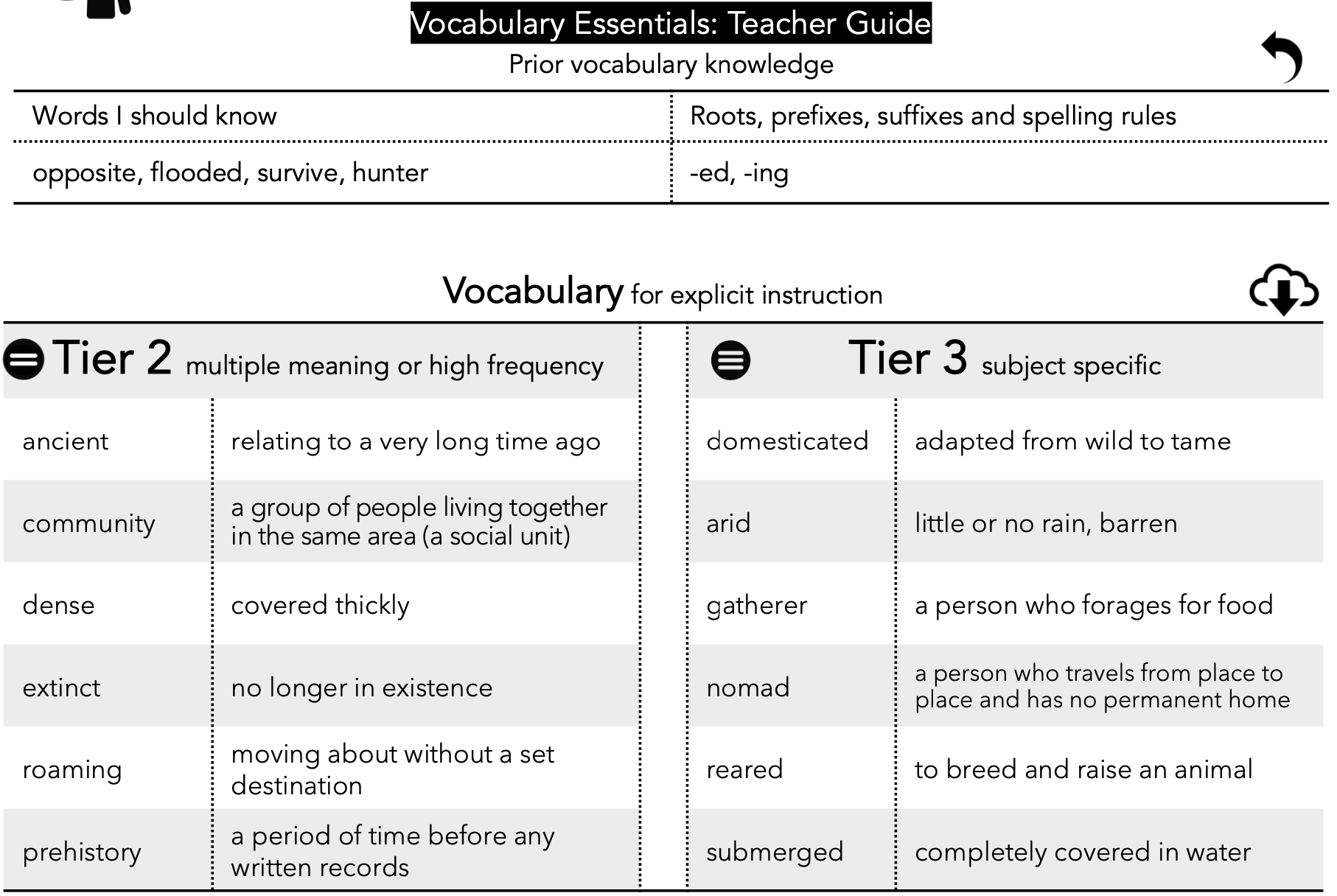
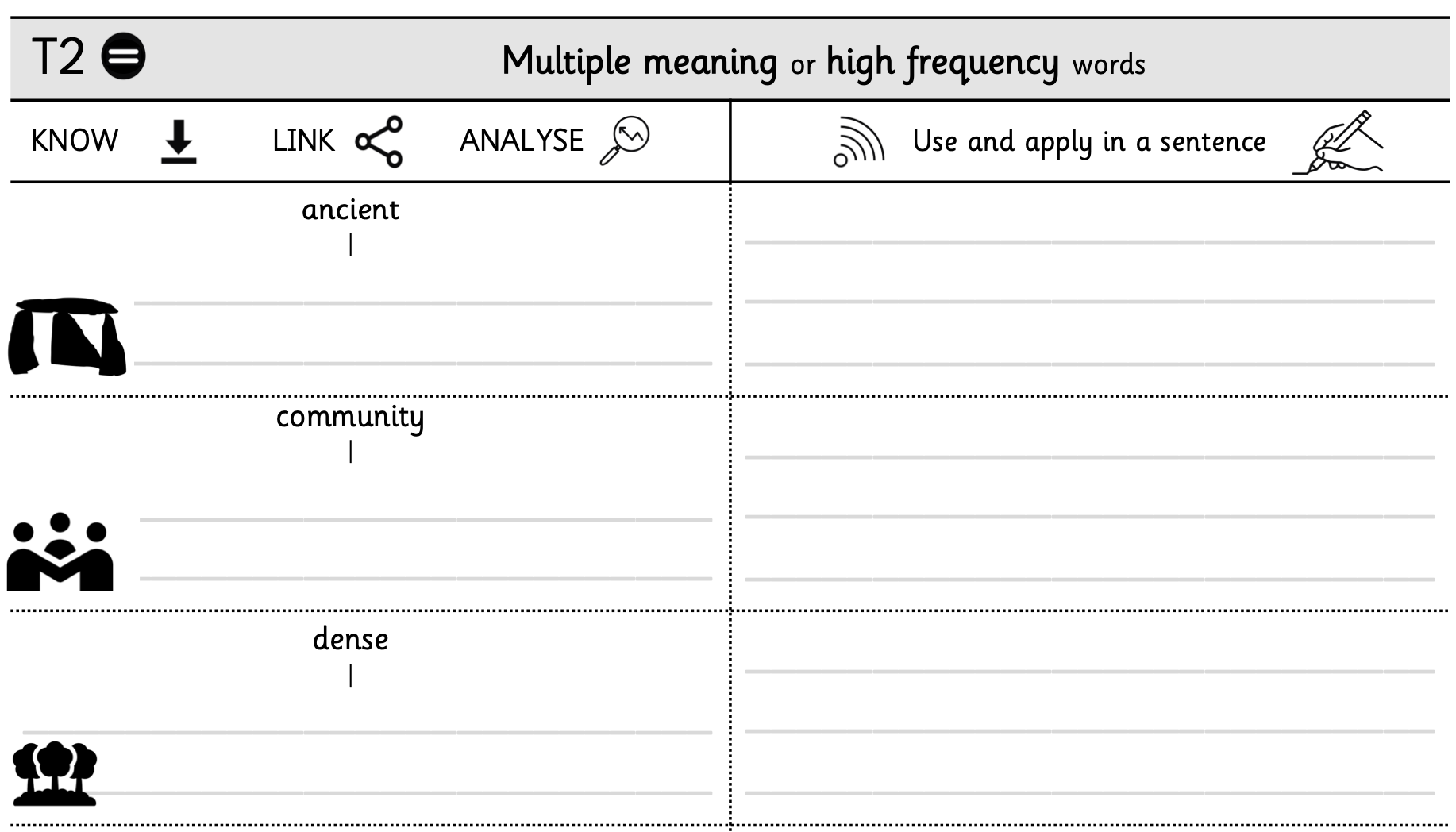
Below is an example of the Vocabulary Guides that our staff use to support their teaching.
Structured, coherent and ambitious learning
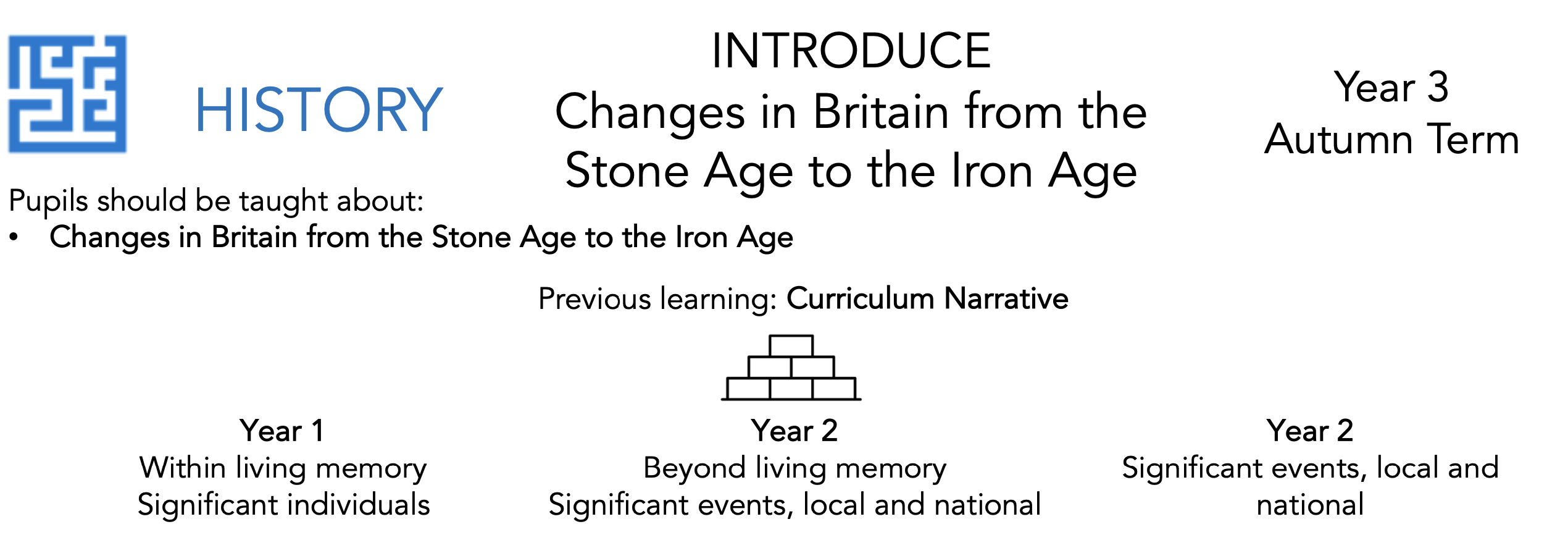
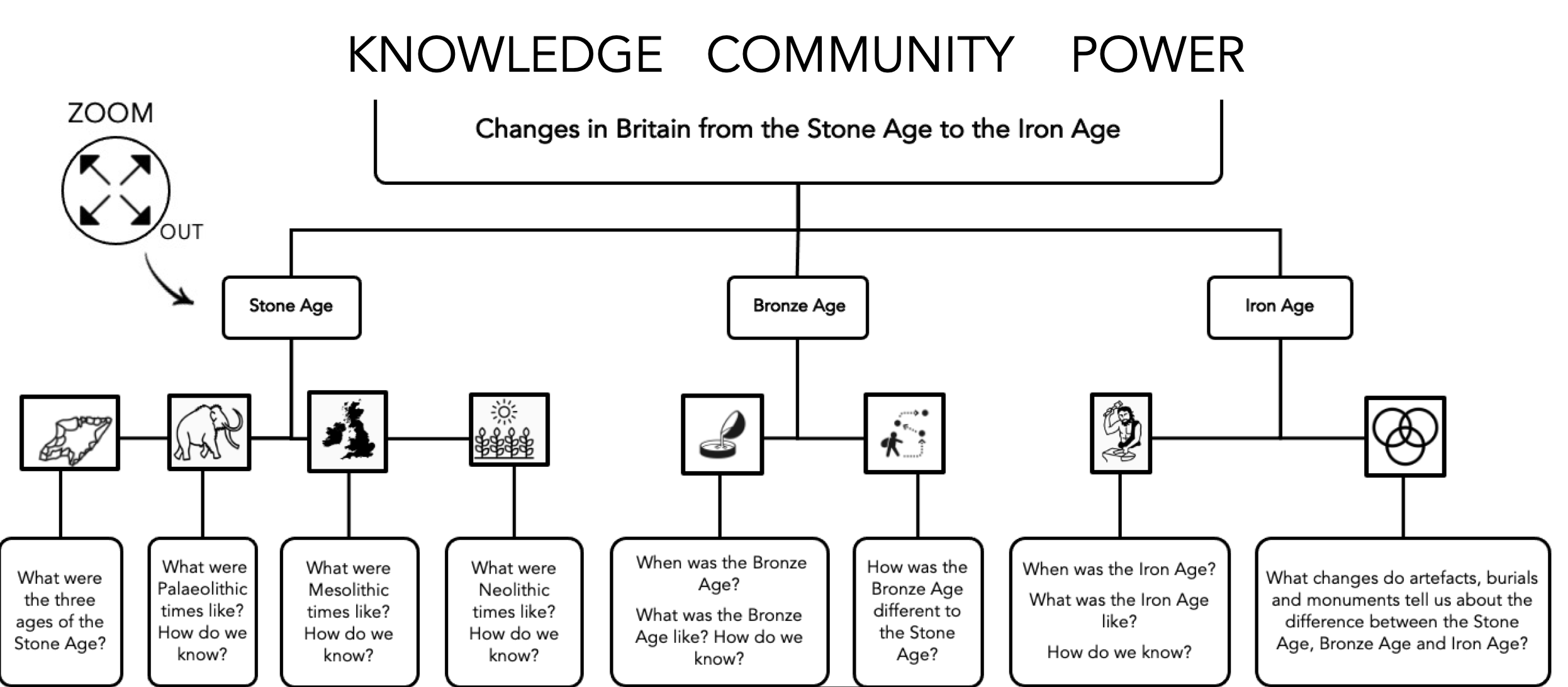
The CUSP curriculum has been carefully developed and structured. Units of learning – ‘modules’, are logically placed within and during specific year groups and terms to build upon what children have already learnt and understood within and across subjects. Each learning unit identifies expected learning from previous year groups and then the big ideas and key enquiry questions for each lesson which the children will acquire knowledge and understanding to be able to answer as they progress through the modules.
School Adaptations
Due to the mixed-age classes that our school has, thoughtful decisions have been made about which key content each year group will cover and adjustments have been made to our overviews, to ensure key learning is revisited in a sequence to support new learning.
Spaced Retrieval Practice Approach
The CUSP model is built upon the research of interleaving and spaced retrieval. Therefore, the module approach with children studying Geography over the week, every 3 weeks for example, ensures children have time to ‘forget’ and then recall previous learning; thus, affirming this learning imprint in a child’s memory. Purposeful decisions are made to make links between subjects, adding depth to children’s knowledge and making effective use of this valuable learning in subjects including English writing.
Careful Sequencing of lesson content
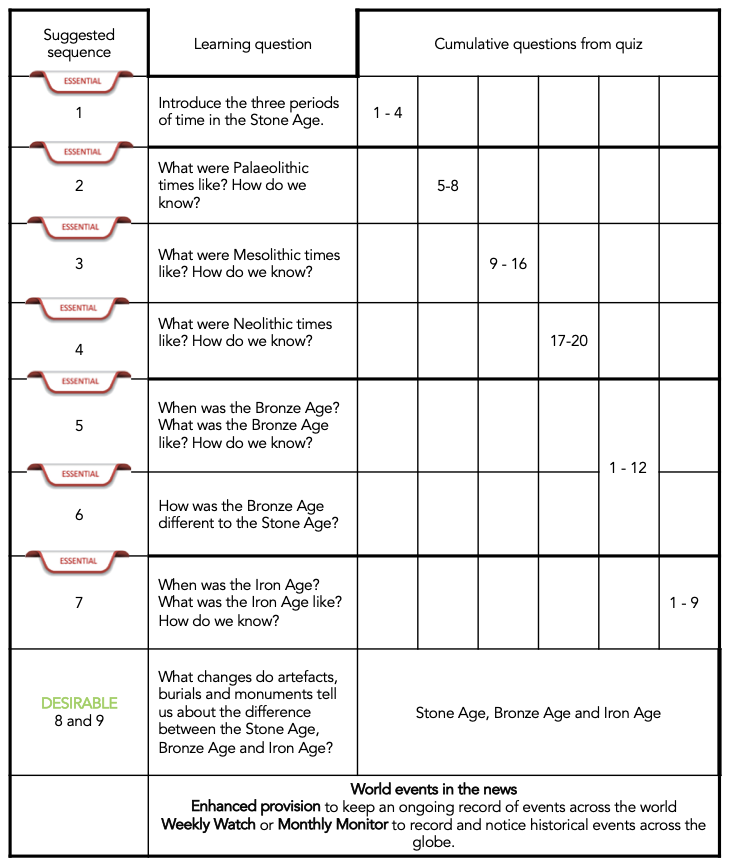
CUSP curriculum has carefully sequenced lessons with ‘Essential’ and ‘Desirable’ knowledge suggested for teachers. This gives teachers the ability to prioritise essential knowledge or revisit key learning so as to make the best use of curriculum time. Highly effective ‘Knowledge Strips’– essential knowledge for each lesson, which is organised for teachers and children using keywords and pictures (Dual coding) supports accessibility for children with Cognition and Learning SEND needs.